
The arts funding ecosystem can be complicated, and there are many rumours and misconceptions about arts grants.
To help demystify the granting process, we’ve put together a few examples of common myths and the truths behind them!
Myth #1: Because my application was declined, my project isn’t worth doing.
Truth: Just because the peer assessment panel decided not to award your application doesn’t mean you should abandon your project!
Your grant application could be declined for a number of reasons. Perhaps you didn’t provide enough detail in your project description, or your budget wasn’t comprehensive. Perhaps your activity wasn’t eligible for funding from MAC. Perhaps there were simply stronger applications in the panel.
If your application was declined, we recommend you reach out to your program consultant to get feedback from the assessment panel. They may also have suggestions for other ways to secure funding for your project.
Myth #2: I need a university degree to get a grant.
Truth: No, you do not need a university degree to receive a grant. Many artists receive specialized training in their field, including through workshops, mentorships, non-university courses, community knowledge-sharing practices, and beyond. This is just one way to meet MAC’s criteria of a “professional artist.”
However, MAC recognizes that many artists are self-taught. You can qualify as a professional artist by a number of other means, including:
- Having shown or published your work publicly;
- Having been paid at industry-standard rates for your art;
- Being recognized as a professional by your peers; and
- Showing significant commitment to your art practice.
Myth #3: I need to live in Winnipeg to get a grant.
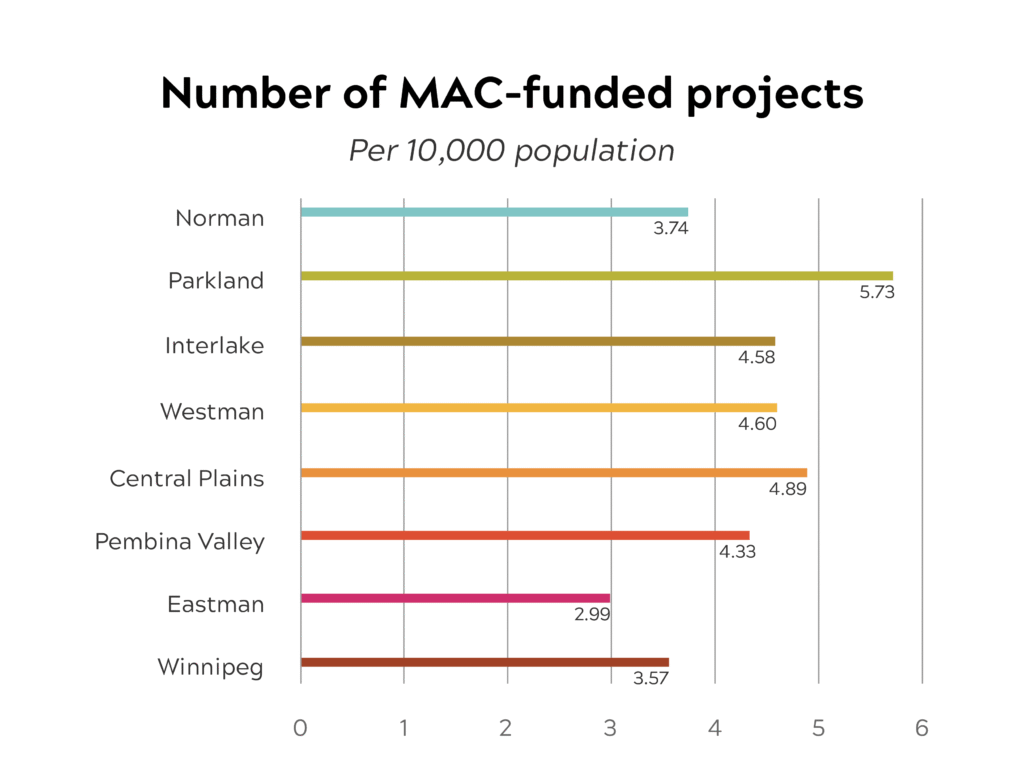
Truth: MAC funds artists, groups, and organizations throughout Manitoba. Approximately 25% of all grants are awarded to applicants living outside of Winnipeg.
In fact, our research shows that per-capita, the Parklands region receives the most grants.
Check out this graph for the number of MAC-funded projects per 10,000 population in 2024, divided by region.
Myth #4: Assessors will see all the other grants I’ve ever applied for.
Truth: Peer assessors can only see the information you’ve included in your grant application. They cannot see your grant or application history, your voluntary identification info, your accessibility financial assistance requests, or anything other information outside of your application.
Myth #5: I need to have connections within the arts community to get a grant.
Truth: MAC’s peer assessors make awards based on a project’s artistic merit, impact, and feasibility – not industry connections or personal relationships. Many people who don’t have connections within the arts community get grants; likewise, many people who have longstanding relationships within the community don’t get grants.
Ultimately, the decisions to as to whether you will be awarded a grant relies on the strength of your project and your application – not who you know.
Myth #6: Established artists have a better chance of receiving funding than emerging artists.
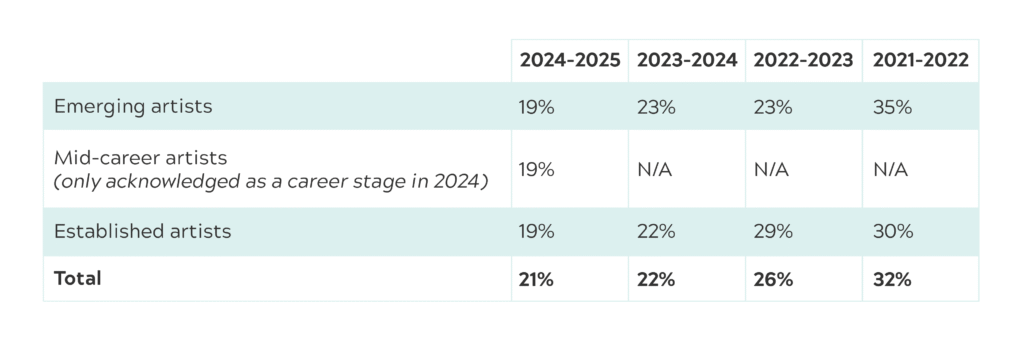
Truth: The differentiation between established, emerging, and mid-career artists is only relevant to our Create grants. Our statistics show that, over the past four years, the success rates of established vs. emerging or mid-career artists are pretty equal!
Here’s a table showing the award rates of emerging, mid-career, and established artists within the Create grant:
Myth #7: Third time’s a charm!
Truth: Through our data, we have found that first- and second-time applicants are just as likely to be awarded than on their third or fourth try.
Though we can’t know for sure, we suspect that first time applicants are sometimes more likely to reach out to a program consultant to discuss their application, which increases their chances of submitting a competitive application.
We hope this blog has given has clarified some myths about applying for grants!
Remember, you can always book a consultation with a MAC program consultant to look over your application and give you feedback before you submit it! Visit our Contact Us page for more information.
